Monday, 15 February 2016

Maria Cristina Falls, Iligan City
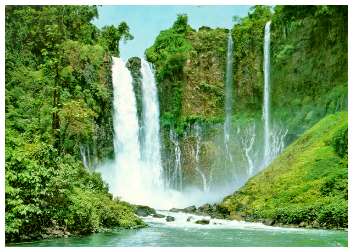
Photo source:  http://www.luzpalma.com/
- The Maria Cristina Falls is the Second Highest Falls in the Philippines with a 320 feet high waterfall which is located in the boundaries of Barangay Maria Cristina, Ditucalan, and Buru-un, Iligan City, 9.3 kilometers away southwest of the city proper.

Maria Cristina Falls is sometimes called the “twin falls” as the flow is separated by a rock at the center of the waterfall. Maria Cristina Falls considered as the most splendid falls among the 23 waterfalls found in Iligan City mainly because it offers an alluring natural beauty and grandeur of Mother Nature. As a matter of fat, is it called as the Mother of Industry and Fountainhead of Progress because it generates 70% of Mindanao’s electricity system.
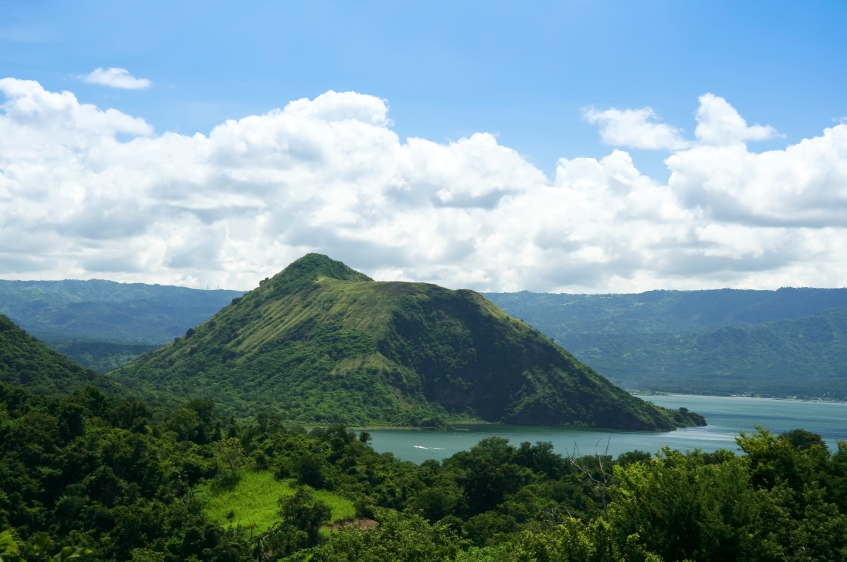
Taal Volcano, Batangas

- Where can you find a volcano within a lake within a volcano within a lake within an Island within a sea? The answer is located between the towns of Talisay and San Nicolas in Batangas well known as the Taal Volcano.

Taal Volcano is a complex volcano, the Smallest Active Volcano in the World, and part of a chain of volcanoes along the western side of the edge of the island of Luzon, which were formed by the subduction of the Eurasion Plate underneath the Philippine Mobile Belt.

It is one of the best nature spots because it offers and provides a picturesque and panoramic view to its tourists. And what’s unique about this nature wonder is that it is a volcano within a lake called the Crater Lake within Volcanoes called Volcano Island and Mt. Macolod surrounded by another lake called the Taal Lake within an Island of Luzon surrounded by the West Philippine Sea.

Fast Facts:
Permanent Settlement in the island is prohibited by the Philippine Institute of Volcanology and Seismology or PHIVOLCS, declaring the whole Volcano Island as a high-risk area and Permanent Danger Zone (PDZ).

Hundred Islands, Pangasinan

- Hundred Islands National Park is a group of Islands with 124 islands at low tide and 123 at high tide scattered along the Lingayen Gulf located in the Alaminos City, Pangasinan.

It covers an area of 18.44 square km (4,557 acres) and believed to be about 20 million years old. Some of the islands are actually have the peculiar “mushroom”-like shapes.

What made it on the list of the best nature spots in the Philippines is that it is wildlife and a home of the following animals. These are monitor lizards, crab-eating macaque, dugong, fraser’s dolphin, common palm civet, laticauda colubrina, olive ridley, green sea turtle, species of red turtle, gecko, various bat species and rodent species.

Tubbataha Reefs Natural Park

- Nominee for the New 7 Wonders of Nature, Tubbataha Reef is a marine sanctuary, an atoll coral reef located in the Sulu Sea which is protected by UNESCO World Heritage Site as Tubbataha Reef Natural Park.
Photo source:
http://www.tourism.gov.ph/

Tubbataha Reef is one of the best nature spots in the Philippines because it houses two atoll coral reef systems. Small coral island is about 3 miles (5 km long) and 3 km wide while the larger coral reef island is approximately 10 miles (16 km) long and 3 miles (5 km) wide. The atolls are actually the sanctuary for more than 1,000 species of coral, fish, and even numerous bird lives. Sadly many are considered as endangered.


Fast Facts:
Aside from being a marine sanctuary, Tubbataha is also renowned for being a bird sanctuary. Around the Tubbataha, there are tens of thousands of masked red-foot bobbles, terns, and frigate birds resting during their annual migration.
Chocolate Hills, Bohol
- Bohol’s signature-attraction, the Chocolate Hills is the jewel of Bohol Tourism and is considered as one of the World’s Famous Natural Wonders.

It is called the Chocolate Hills because during the summer, the cone-shaped hills covered with green grass dries up and turns into chocolate-colored hills which is naturally beautiful.

According to the Seven Natural Wonders, there are at least 1,260 hills but there may be as many as 1,776 hills spread over an area of more than 50 square kilometers (20 sq. miles).

Fast Facts:
The Chocolate Hills form a rolling terrain of haycock hills-mounds of a generally conical and almost symmetrical shape. Estimated to e from 1,268 to 1,776 individual mounds, these coned-shaped or dome-shaped hills are actually made of grass-covered limestone. (wikipedia.com)

Also known as the “Chocolate Kisses”.

Mount Mayon, Albay
- Best known as the Mayon Volcano, Mount Mayon is an active volcano        located in Legaspi City, Albay. It is one of the best nature spot in the       Philippines mainly because of its “perfect cone” formation which is almost in symmetric conical shape.

Bulkang Mayon (locally coined term) is actually the most active volcano in the Philippines with over 48 times recorded eruptions in the past 400 years.

Fast Facts:
The most destructive eruption of Mayon occurred on February 1, 1814. The Volcano was belching dark ash and eventually bombarding the town with tephra that buried the town of Cagsawa.

Today, only the bell tower of the Church of the Cagsawa which was largely destroyed during the 1814 eruption of the said volcano.


Boracay Island
  - Formed like a dumb-bell and best known as a vacationer’s paradise, Boracay Island is one of the best beaches in the world and always on the list of the best beach destinations in Asia because of its 4 km long powdered-like white sand beach and the crystal clear turquoise water.

Boracay Island has 12 beaches to count. The most famous is the White Beach which most of the Night Life, establishments such as hotels, restaurants, shopping malls, and bars are situated. Bulabog Beach on the other hand is directly opposite and is the secondary water sports beach which mainly protected by a great reef.

Aside of its famous white sand, Boracay Island also have one of the best sunsets in the world that will surely inspires you to enjoy life and live to the fullest. That is why it is being tagged as a vacationer’s paradise.

Fast Facts:
By the 1990’s, Boracay’s beaches were being acclaimed as the best in the world. In 2012, the Philippine Department of Tourism reported that Boracay had been named the World’s Second Beach Beach after Providenciales in the Turks and Caicos Islands.

Boracay was awarded in the “Travelers’ Choice 2011” by Trip Advisor as the Second Best Beach (out of 25) in the World”.

Boracay made a debut appearance in the Top 10 Islands list in the Travel+Leisure travel magazine World’s Best Beach Award 2011, ranking fourth.

“It’s Boracay, not Bora!”- The newest campaign of Boracay Island stating that Boracay is different from that of the Bora-bora which is also a white beach on other country.